

Programme note作品解説
身体の拡張は、どの地点で「喪失」へと反転するのか。
本作は、協奏曲の伝統的な前提である「個人 対 オーケストラ」という階層構造を出発点としない。19世紀的な、絶対的でカリスマ的な存在としてのソリスト像も、20世紀的な、その主体性を解体しようとする批評的身振りも、ここでは出発点とはならない。むしろ本作は、ひとつのキメラから始まる。フルート、オーケストラ、エレクトロニクス、映像があまりにも密に重ね合わされ、いったい誰が語っているのか判別できない状態である。ソリストはこの巨大な塊のなかから救い出され、引き出されていく過程において、受動的に主体性を獲得するのである。
その背後には、楽器そのものが背負ってきた記憶がある。シュリンクスの神話では、追われる身体が葦へと姿を変え、さらにその葦が葦笛へと変わる。数世紀を経て、宮廷や音楽院、そして産業的な標準化がフルートの形を作り上げると同時に、それを演奏する身体をも規律化してきた。本作は、この記憶を、アルゴリズムによる最適化以前のインターネットの姿と並置する。そこにあったのは、まだ整理されていない混沌であり、個人が文脈から切り離され、あらゆる保護の枠組みを失ったまま、流れ込んでくるものすべてに対して無防備にさらされていた世界である。
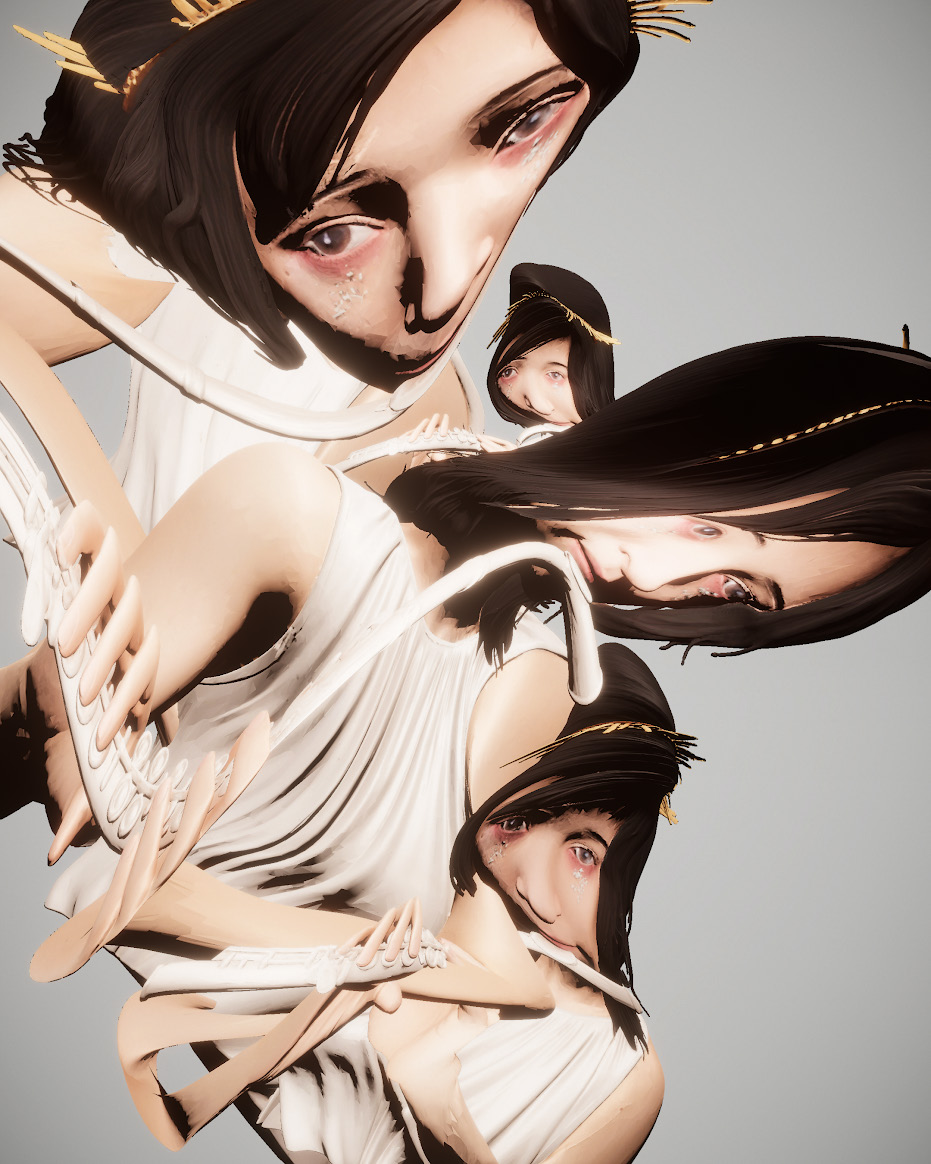
舞台上では、フルート奏者とアバターが並び立つ。生身の演奏者は舞台演出によって覆い隠され、神格化されるのは演奏者ではなく、フルートそのものである。フルートはオーケストラのなかに、スピーカーのなかに、そして映像のなかに、音楽のあらゆる場所を占めていく。やがて、身体の拡張はその喪失へと転じる。
English
This work does not take the concerto's traditional hierarchy of the individual against the orchestra as its premise. Neither the nineteenth-century image of the soloist as an absolute, charismatic figure, nor the twentieth-century critical gesture of dismantling that subjectivity, is treated as a point of departure. The piece begins instead with a chimera: flute, orchestra, electronics and video are layered so densely that it is impossible to tell who is speaking. The soloist does not step forward; the soloist is rescued from this mass, and acquires subjectivity passively, in the course of being drawn out.
Behind this lies the memory of the instrument itself. In the myth of Syrinx, a pursued body is turned into a reed, and the reed into pipes. Centuries later, courts, conservatoires and industrial standardisation shaped the flute, and disciplined the bodies of those who played it. The work sets this memory beside the internet before algorithmic optimisation: an unsorted chaos in which individuals, cut off from context and from every protective framework, were exposed, defenceless, to whatever arrived.
On stage, the flutist and an avatar stand side by side. The living player is veiled by the staging, and it is the flute, rather than the player, that is deified, as it takes up residence in every corner of the music: in the orchestra, in the loudspeakers, in the image. At some point, the extension of a body turns into its loss.
Creditsクレジット
- Flute菊地 奏絵Kanae Kikuchi
- Conductor茶木 修平Shuhei Chaki
- Orchestra東京藝術大学有志オーケストラGEIDAI Voluntary Orchestra
- Composition佐藤 伸輝Nobuaki Satoh
- Electronicsたこミtacomi
- Video and avatarJACKSON kaki
- Sound磯部 英彬Hideaki Isobe
Dedicated to Kanae Kikuchi
Instrumentation編成
- Soloist
- Solo flute
- Woodwinds
- 2 flutes (both doubling piccolo)
2 oboes
2 clarinets
1 bassoon - Brass
- 2 horns
1 trumpet
1 trombone - Percussion
- 1 timpani player
4 percussiondrum set, glockenspiel, xylophone, vibraphone - Strings
- 11 – 9 – 7 – 6 – 4vn I – vn II – va – vc – cb1 string quartet
- Media
- Electronics (fixed media)
Video (fixed media)
ソロ・フルートは舞台中央に置かれた透明なボックスの中で演奏する。映像は舞台上方に投影され、光とスモークが頭上から降りる。いくつかの場面でボックスは黒い布で覆われる。
Information公演情報
- Date
- 2026.12.16
2026年12月16日(水) - Time
- 17:45 開場 / 18:30 開演
- Venue
- シアター1010(THEATER 1010)
〒120-0034 東京都足立区千住3-92 千住ミルディスI番館 10階
北千住駅 4番出口より徒歩4分 - Programme
- 第I部 カイヤ・サーリアホ《エミリー》
第II部 佐藤伸輝&たこミ&JACKSON kaki『フルート協奏曲』(世界初演)